PROJECT.

Findlay Market Square

The balancing act


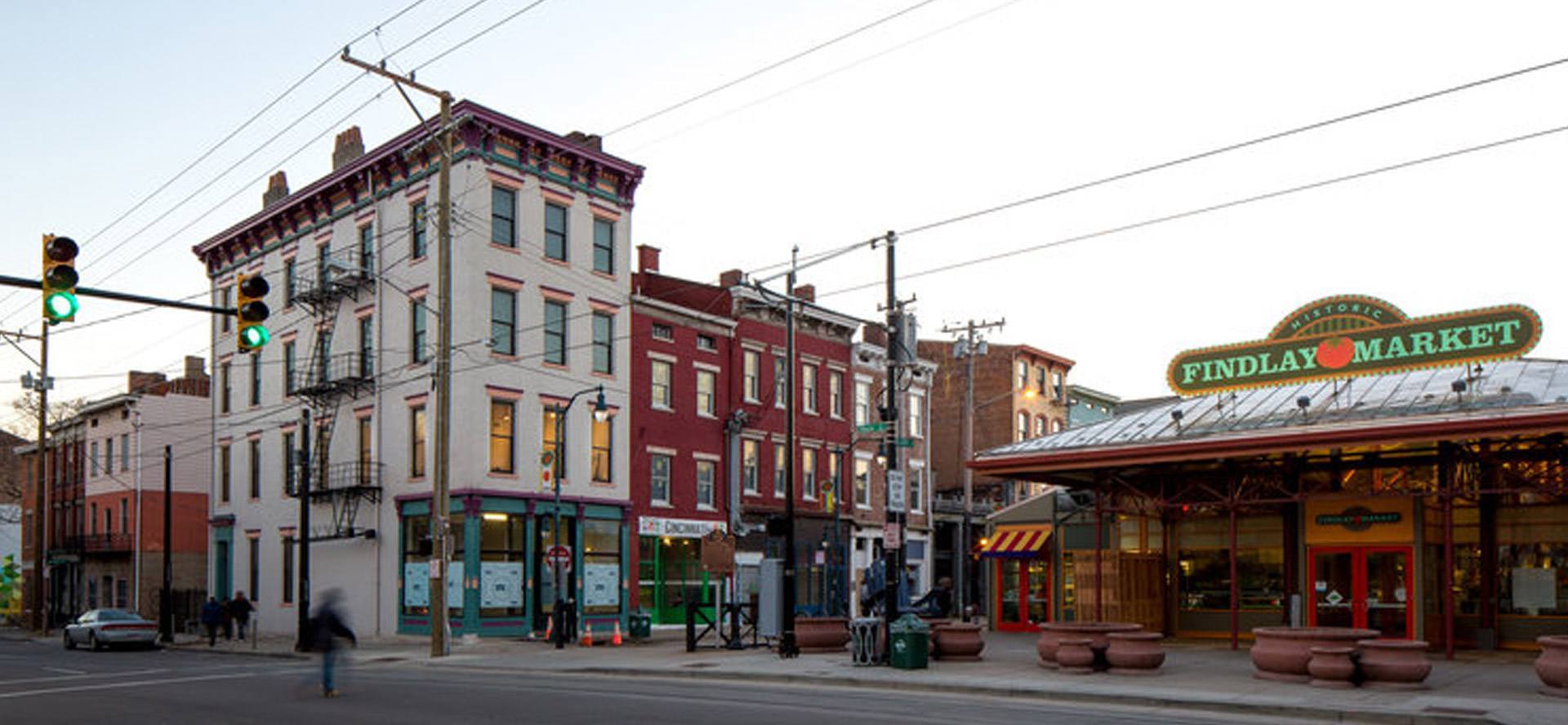
Renovations to a series of historic buildings at Cincinnati’s iconic Findlay Market required sensitivity to design, historic preservation, and green requirements.

Problem


This project included renovations to a series of approximately 150-year old buildings near Findlay Market in Cincinnati’s Over-the-Rhine historic district. The challenge was to identify how to retrofit these buildings in a way that simultaneously supported the architect’s design goals, achieved performance targets, and met development requirements.

The project’s financing relied upon a combination of historic tax credits, Cincinnati’s LEED Property Tax abatement, and New Market Tax credits. A central challenge was to balance these requirements: namely identifying an appropriate path toward LEED certification that could adhere to historic guidelines.

We also helped the construction team troubleshoot the challenges that inevitably arise with historic retrofits, whether achieving air tightness and duct leakage targets, or diagnosing humidity issues.

Solution


Leverage natural synergies between green and historic.

Drawing on our depth of experience in both historic retrofits and green certifications, we crafted a strategy that took full advantage of the intrinsic benefits of historic buildings and prioritized the most impactful and cost-effective interventions to achieve the project’s certification goals.

Fit seamlessly into the design and construction process.

We worked closely with the design team to integrate design-phase requirements in the drawings and specifications, and worked equally closely with the construction team to ensure smooth implementation and timely certification.

Provide quick, actionable diagnostics during construction.

As inevitable, unique issues arose, our testing and verification team provided fast, clear, and accurate building diagnostics – critical for keeping the project on schedule and on track to meet its certification, energy reduction, and thermal comfort goals.

The Impact


54%
reduction in energy cost

25%
reduction in water use

93%
of existing building re-used

94
Walk Score