
PROJECT.

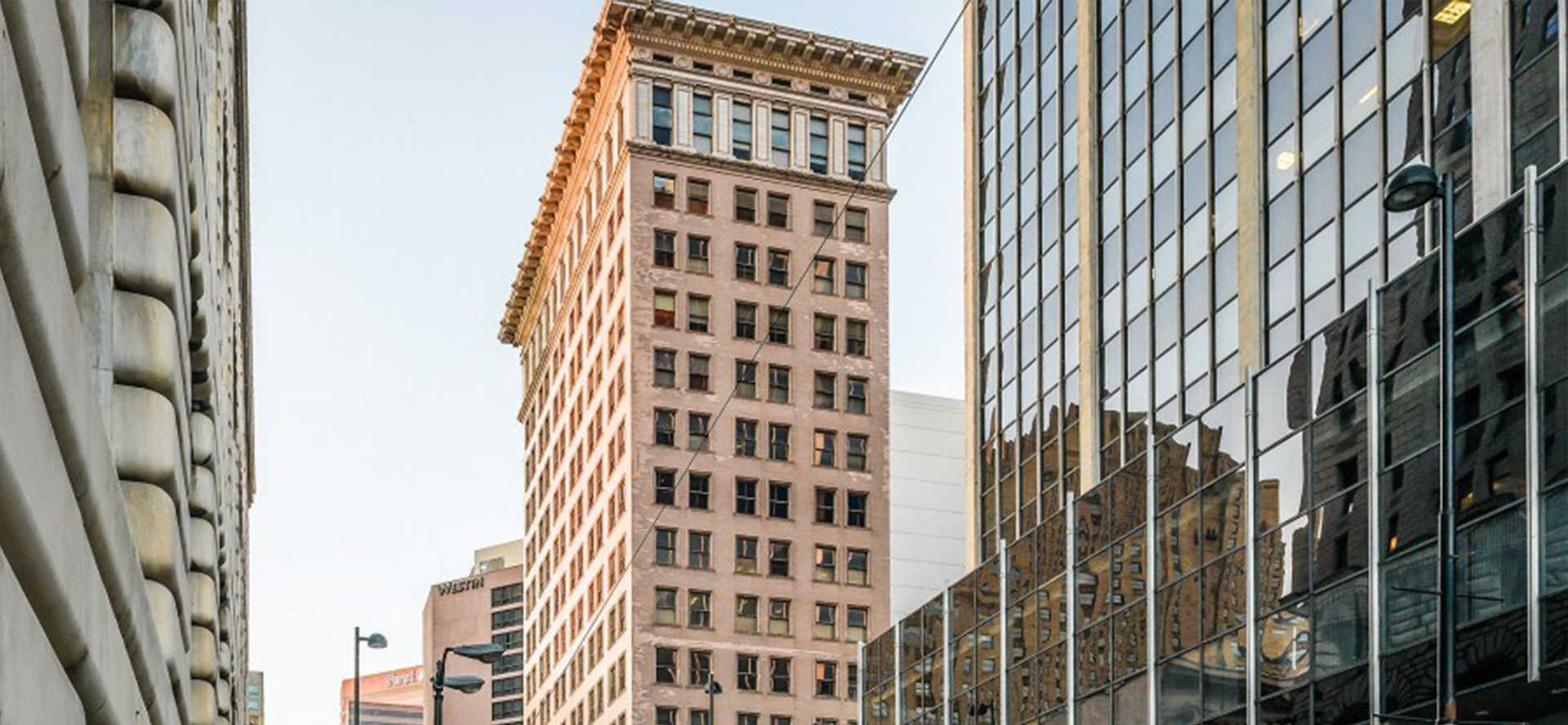
INGALLS BUILDING

Revitalizing a Historic Landmark


The first skyscraper made of reinforced concrete has been preserved with its original features and sustainable design principles.

Problem


Constructed in 1903, this Beaux-Arts 16-story marvel stands as a testament to engineering innovation, earning its place on the National Register of Historic Places in 1974. It once served as office space with first-floor retail, but stood neglected at the time of its conversion into a Courtyard by Marriott Hotel. The architect's vision involved restoring the original artistic elements, securing preservation tax credits, and achieving LEED Gold certification.

Adhering to strict historic preservation guidelines prohibits modifications to the building's façade. The team's challenge was to bring the building's performance into the twenty-first century while preserving its historical character.

Solution


Overcome energy reduction restrictions.

The western façade brought in substantial solar heat due to its high window-to-wall ratio, but preservation limited window alterations. To boost energy efficiency, storm windows were installed, and spray foam insulation was applied to the interior of concrete walls, increasing their insulation. These strategies, in turn, reduced the size of the required HVAC system.

Utilize innovative technologies.

The guestroom water source heat pump utilizes passive infrared occupant-sensing technology, automatically adjusting temperatures to conserve energy when the room is vacant. Occupancy sensors turn off lights when common spaces are unoccupied. Ventilation and exhaust systems operate continuously, meeting hotel standards for fresh air and guest well-being.

Recognize historic value.

The project takes advantage of the inherently sustainable attributes of the historic structure. It is in a dense, walkable location with excellent access to public transit and bicycle infrastructure. Its design provides excellent views and daylighting. And re-using an existing building and much of the historic detail saves the significant amount of embodied carbon compared to building new.

The Impact


LEED Gold Certified


44%
Reduction in energy use from LEED baseline

36%
Reduction in water use

96%
Diversion of construction waste

97
Walk score